
Over 12 million people live in banking deserts – communities without a physical bank within a 10-mile radius. In rural areas, this leaves people without a place to get loans, deposit checks, and get cash. Many rural areas still prefer cash over other forms of payment like credit cards. Without banks, rural residents’ credit scores can drop, or they can be taken advantage of by predatory lending like payday loans.
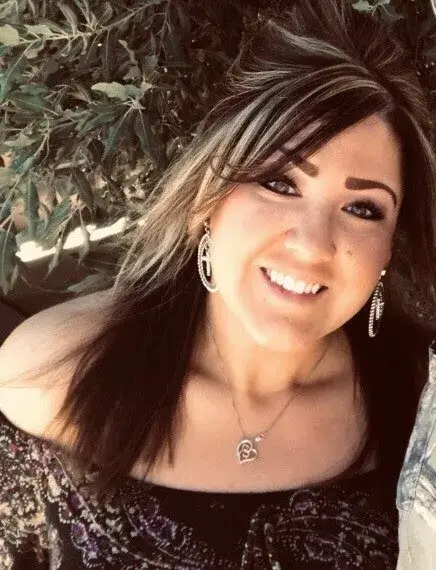
Jennifer Robinson is the branch manager at Vantage West Credit Union in Tombstone, Arizona, a town of 1,300 in southern Arizona that maintains a Wild West identity, complete with false front storefronts and western culture preserved through museums and famous gunfight reenactments. Robinson shared a bit about what makes credit unions different from traditional banks and how they work to support her rural community.
This interview has been edited for length and clarity.
The Daily Yonder: Tell me a little bit about yourself and how you started working with the credit union?
Jennifer Robinson: Next year will actually be my 20th year with Vantage West. I never intended to stay. I was going to school to be a veterinarian, funny enough, and just fell in love with the members, with other team members that I met and worked my way up to branch manager. I actually just started managing the Tombstone branch in the summer. I have helped out there in years past, but when this opportunity came up, I had already been kind of helping out and decided to jump at it. It’s just so beautiful out there. It’s a different way of life, and to be able to experience both in a busier city and then, you know, go out to a rural area like Tombstone, was just a great opportunity for me. And there was a manager that I had worked with for quite some time who actually came over with the tombstone merger and just she was so deeply rooted in that community. So I really enjoyed getting to know everybody, introducing myself, and getting to be part of that community.
DY: Tell me a little bit about what Tombstone is like, and what it feels like to be in rural Southern Arizona.
JR: So Tombstone is a town built on a rich history of the American Southwest. They keep true to a lot of their traditions. It’s a tourist town, and even when you get to the Vantage West Branch out there, it looks like something out of the Old West. We’ve kept very true to our traditions, to the roots of the Tombstone Federal Credit Union, which was what it was before the merger. But that’s what you see, just the streets of Tombstone, and there’s a lot of small businesses just in that area, and a lot of tourist traffic through there. But the drive to there and around there, it’s just open desert.
DY: Let’s start with the basics of credit unions. What makes a credit union different than other types of banks?
JR: The biggest thing that makes a credit union different is that we are not for profit. We are owned by our members. Larger banks have shareholders that are interested in profits and what that financial institution is doing. As a credit union, we really prioritize people over profit, so we are looking at what we can do to enrich the communities that we’re in, how we can give back to those communities, and how we can serve those communities.
DY: Can you talk a little bit about how credit unions serve rural communities better than a traditional bank? What are some of those ways that you give back?
JR: So for us at the Tombstone location there are many different things that we’re involved in, like the Tombstone Chamber of Commerce, We’re involved with the food bank, with the school district. There are so many different community events and things that my team actively participates in. We’re always looking for new opportunities as a way to create awareness that we’re there for the residents of those areas surrounding Tombstone, as well as within Tombstone. The credit union actually gives volunteer hours, so we give all employees 16 hours to volunteer however they see fit. And my team consistently exhausts those hours. How can we have one of them out of the branch and in the community going and visiting the food bank and talking to members, spreading financial awareness, and we kind of work those things into their every day. Or can I have them leave a little bit early today so that on Saturday they can go participate in a parade and those things that are important to the community. We try to stay involved and to create that awareness that we’re there.
DY: A lot of rural Americans live in places where there might not be any bank available in the town, or even within an hour or two outside of the town. What’s lost when people don’t have access to banking? Why is banking important?
JR: When there aren’t places that they can go like Vantage West, where they can see the same faces, they can have that person that they trust, that they know is going to give them advice, it can lead to where they could be taken advantage of or not have the resources that they need. I know in Tombstone there’s not really a check cashing place, but in some of those surrounding areas, like Sierra Vista, which is a closer town, there might be that temptation to go to a payday loan place, because they don’t know that we’re there for them, and we’re going to give them a more fair and honest financial solution to what they’re what they’re needing. Another big thing right now is just all the fraud and the scams that are out there. It’s hard to tell what’s good and what’s bad, and without having a trusted financial institution where you can go and talk and be open, ‘hey, this is what someone’s asking me to do. Is this, you know, good or not’ – that’s what my bankers are able to do. And we catch those types of things on a regular basis, because we’re there for our members, and we can tell them this doesn’t seem right, and ask more questions.
DY: How does relationship building play a role in all of that? It sounds like that’s really kind of at the root of everything that you’re doing.
JR: One of the important things that we do is we hire locally from surrounding communities, and I think that ensures that [employees] have an understanding of the types of people that live in those communities, the needs of those people in the communities, because they themselves are part of those communities and rooted there. That helps build trust in those small towns.
DY: What do you see as some of the most pressing economic issues in rural Arizona right now? What are people having the hardest time with?
JR: Tombstone is a tourist town and a lot of the surrounding areas are heavy in agriculture. Things like that can cause fluctuations in income and pay depending on what the weather is like, or tourist seasons.Those types of things can really impact the people that live and work in this area. So I think some of the things that I’ve seen are very limited credit or no credit and having that fluctuating income sometimes makes it hard to establish credit. Also, housing. There’s not always available housing or affordable housing for people. The other thing I’ve seen is that people are less likely to use technology overall. So we’ve really tried to help educate on using the digital avenues and offer other things, like we’re piloting virtual appointments so they wouldn’t have to necessarily drive if they have internet. They can do a face to face appointment, which face to face is a big thing – they want that person that they’re, they’re comfortable working with, and so we’re piloting things like that to give other options. But also, like I mentioned earlier, the scams and the fraud, we’re seeing a lot of that. It doesn’t matter where you live, fraudsters are able to find you and try to take advantage of you. So that’s another thing that we’ve really worked closely with our members trying to create awareness.
DY: How can you better meet the needs of people with that fluctuating income? How do you help fill those gaps?
JR: All of my team members are financial wellness coaches, so we look at ways that we can help with budgeting, help them create plans. Maybe if they do not have great credit, helping them find ways to get their credit back on track to where they would be able to get a loan with the credit union too. We have local underwriting, so we make decisions locally in Arizona, which allows us to really look at the whole picture. And we can see those types of things and try to work with our members on something that would benefit them and would also be in line with what the credit union is trying to do, which is to help the communities that we serve well.
DY: Thanks so much Jennifer, is there anything that I didn’t ask that you’d want to add?
We’re really just trying to meet all of our members where they are, whether that be face-to-face or helping educate them with the digital options and get them comfortable with that. Another thing, in addition to the virtual appointments is we also have ATMs with Live Banker Assist now, which is like an ATM, but it has a live banker on there, and that’s available to them because we understand their hours might not be the same as banking hours, and it might not be as convenient for them to get there, they can still have that comfort of talking face to face with someone. A lot of our members drive at least 20 miles to come to this branch from those surrounding communities, and even in Sierra Vista, which is the next closest area there’s other banks there, there’s some larger banks there, but we are the credit union, and they’ll drive to us versus going to that bank that’s in their community. So I think that speaks volumes to just the relationship that credit unions can build versus [traditional] banks. We really take a more educational approach and make sure they feel comfortable.