
The holidays are full of celebrations, traditions, travel, and gift-giving. While it’s one of the most enjoyable times of the year, it can also become one of the most expensive and they tend to creep up on us. We will
This blog, “How to Create a Holiday Budget” may help you enjoy the festivities without the stress of overspending. By planning ahead, setting spending limits, and saving early, you can stay focused on what matters most while keeping your finances on track.
If you’re wondering how much to save, when to start budgeting for gifts, and how to avoid holiday debt, here’s your step-by-step guide.
1. Start Planning Before the Holidays Arrive
One of the biggest holiday budgeting mistakes is waiting until November or December to start thinking about expenses.
September is actually one of the best times to create a holiday spending plan. Starting early gives you several months to save, compare prices, and spread out purchases instead of relying on credit cards at the last minute.
The earlier you begin, the more flexibility you’ll have to adjust your budget and avoid financial stress.
2. Estimate Your Total Holiday Spending
Before creating a budget, make a list of every holiday expense you expect to have.
Your list may include:
- Gifts for family and friends
- Holiday meals and entertaining
- Travel expenses
- Decorations
- Charitable donations
- Holiday cards and shipping costs
- Seasonal events and activities
Adding all anticipated expenses together will give you a realistic picture of your holiday spending needs.
The Consumer Financial Protection Bureau offers helpful budgeting resources to help consumers plan for seasonal expenses.
3. How Much Should I Save for Holiday Spending?
The right amount depends on your financial situation, income, and holiday traditions.
A good approach is to start by determining how much you can comfortably spend without dipping into emergency savings or carrying a credit card balance into the new year.
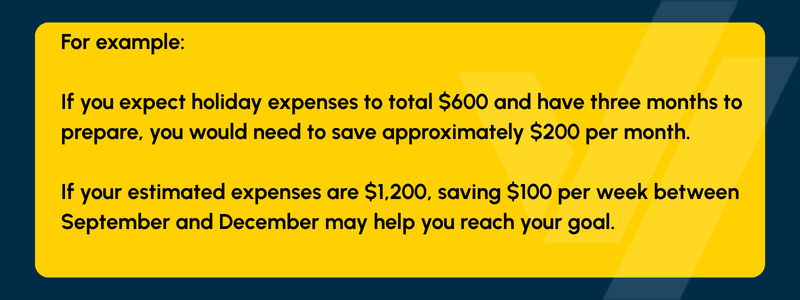
The key is to choose a number that supports your holiday plans while fitting within your overall financial goals.
If you’re looking for a place to separate holiday savings from everyday spending, consider opening a dedicated savings account and setting up automatic transfers.
Learn ways to build your savings faster with our Savings accounts.
4. How to Create a Holiday Budget Category for Gifts
When people think about holiday expenses, gifts often make up the largest portion of the budget. To stay organized, break your gift budget into individual categories or recipients. Basically, make a list, and check it twice.
For example:
| Category | Budget |
| Immediate Family | $400 |
| Extended Family | $200 |
| Friends | $100 |
| Teachers & Service Providers | $50 |
| Total | $750 |
Having spending limits for each category can help prevent impulse purchases and keep your overall spending under control.

5. When Should I Start Budgeting for Gifts?
The best time to start budgeting for gifts is now.
Waiting until the final weeks before the holidays often leads to rushed purchases and unnecessary spending.
Starting in September allows you to:
- Take advantage of sales throughout the season
- Compare prices before buying
- Spread purchases over several months
- Reduce pressure on your monthly budget
You may even find opportunities to purchase gifts before major shopping events such as Black Friday and Cyber Monday.
The Federal Trade Commission also offers guidance on safe online shopping and avoiding scams during peak shopping seasons through its resources.
6. Save Automatically Throughout the Fall
Consistency is one of the simplest ways to reach your holiday savings goal.
Consider automating transfers from your checking account to a designated holiday savings account every payday. Even small contributions can add up over time.
For example:
- $25 per week equals $325 over 13 weeks
- $50 per week equals $650 over 13 weeks
- $100 per week equals $1,300 over 13 weeks
Automating savings can remove the guesswork and help keep your holiday budget on track.
Explore budgeting and money management tools available through our Online Banking.
7. How Do I Avoid Holiday Debt?
The best way to avoid holiday debt is to spend only what you’ve planned and saved for.
Here are a few strategies that can help:

- Set a spending limit before shopping.
- Track purchases throughout the season.
- Avoid “buy now, pay later” offers unless they fit comfortably within your budget.
- Prioritize meaningful experiences over expensive gifts.
- Use cash or debit for discretionary purchases when possible.
- Review your budget weekly to stay on target.
If unexpected expenses arise, revisit your holiday plan and adjust spending in other areas rather than immediately turning to credit.
Remember, the goal isn’t to have the most expensive holiday season. It’s to create meaningful memories without carrying financial stress into the new year.
Make This Holiday Season More Affordable
The holidays don’t have to derail your financial goals. A thoughtful holiday budget can help you prepare for expenses, avoid debt, and enjoy the season with greater confidence.
By starting early, saving consistently, and tracking spending along the way, you’ll be better positioned to celebrate the holidays while staying financially healthy.
The best holiday gift you can give yourself may be entering the new year without holiday debt and with your financial goals still intact.
Q: Is it too late to start a holiday budget in September?
No. September is actually one of the best times to start a holiday budget. Beginning early gives you several months to save, spread out purchases, and prepare for seasonal expenses without relying on credit cards.
Q: What should be included in a holiday budget?
A holiday budget should include more than just gifts. Consider travel, holiday meals, entertaining, decorations, charitable donations, greeting cards, shipping costs, and seasonal events or activities.
Q: How can I save money on holiday gifts?
Start shopping early, compare prices, create a gift list before you buy, look for seasonal sales, and set spending limits for each recipient. Planning ahead can help reduce impulse purchases and overspending.
Q: Should I use a credit card for holiday shopping?
Using a credit card may be helpful if you can pay the balance in full when it’s due. If carrying a balance is likely, it may be better to use cash, debit, or savings earmarked specifically for holiday spending.
Q: How much should I spend on holiday gifts?
There is no one-size-fits-all amount. A good rule is to choose a spending level that fits comfortably within your budget and doesn’t interfere with savings goals, bill payments, or everyday expenses.
Q: How can I avoid overspending during Black Friday and Cyber Monday sales?
Create a shopping list before sales begin, establish a spending limit, and focus on planned purchases. Sales can save money, but only if you’re buying items you intended to purchase anyway.
Q: What if my holiday spending exceeds my budget?
If costs are higher than expected, look for opportunities to reduce spending in other holiday categories, choose more affordable gifts, or focus on experiences rather than expensive purchases. Avoid immediately turning to debt to cover the difference.
Q: What’s a holiday sinking fund?
A holiday sinking fund is a dedicated savings account or budget category where you set aside money throughout the year for holiday-related expenses. This strategy can help reduce financial stress and minimize the need for debt. Explore Vantage West Savings Account options.
Q: How much should I save each month for the holidays?
Divide your estimated holiday spending goal by the number of months remaining before your holiday expenses begin. For example, a $900 holiday budget started in September would require saving approximately $300 per month through November.
DISCLOSURES
*Minimum $5.00 to maintain account and membership. Rates subject to change. Rates for Regular Savings are variable and may change after the account is opened. Withdrawals, fees, and other conditions could reduce the earnings on the account. Subject to approval. Certain restrictions may apply. Federally insured by NCUA. Annual Percentage Yields (APY) accurate as of 09/01/2026.
This content is provided for informational and educational purposes only. Vantage West Credit Union offers these blogs as educational resources regarding various financial topics and scenarios. We cannot and do not guarantee their applicability or accuracy with respect to your individual circumstances. We encourage you to seek personalized advice from our qualified Financial Coaches regarding your personal financial situation. Membership required. All products and services are subject to approval. Certain restrictions may apply. Federally insured by NCUA. RITM0065856.